LUV MY BUNNS
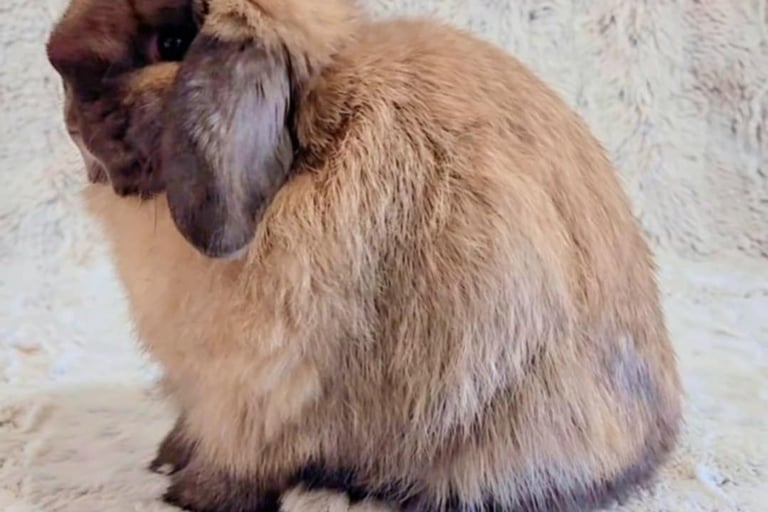
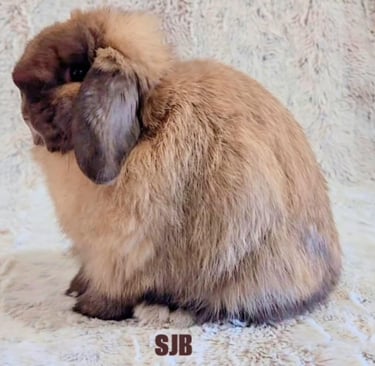
Here is a breakdown and summary of the ARBA Holland lop score card
Showroom Classes & Weights * Senior Bucks & Does: 6 months of age and older; maximum weight is 4 lbs. * Junior Bucks & Does: Under 6 months of age; minimum weight is 2 lbs.
Age Rules: Rabbits cannot be shown in an age category higher or lower than their actual age.
Recognized Groups & Entry Classifications * Groups: Agouti, Broken, Pointed White, Self, Shaded, Tan Pattern, Ticked, and Wide Band.
Entry Categories: Rabbits are entered and shown in two main classifications: Broken Pattern and Solid Pattern. Recognized colors within a group are not judged separately.
Schedule of Points (100 Total Points)
General Type (84 Points)
Head, Ears, Crown (42 pts)
*Head: 24 pts
• Ears: 10 pts
• Crown: 8 pts
Body & Bone (42 pts)
• Body: 32 pts
• Bone, Feet, Legs: 10 pts
Fur 7 pts
Color & Markings 4 pts
Condition 5 pts
Handling & Posing Instructions
* Posing Technique: Position the hindquarters and gently support under the chin so the rabbit poses lightly on its front feet. Pushing the animal down with flat forelegs masks proper breed type.
* Evaluation: Do not hold the head while inspecting the topline. Allow the rabbit to relax naturally to assess proper ear carriage.
General Type:
BODY- Points 32: The body is to be short, massive, and thick set. The topline should start behind the head and carry back to a hindquarter of equal depth. When viewed from the front, the chest should be broad, exhibiting width between the front legs. The shoulders should be short with depth nearly equal to width, but not exceeding width of hindquarter. The hindquarter should be broad, deep and well-rounded with depth to approximate width. The animal is to be well muscled. A small, simple dewlap is permitted in does.
Faults -Body lacking depth; long, low, or narrow shoulders; chopped, pinched or undercut hindquarters; large dewlap in does. Fault severely for low head mount, long or narrow body; and flat shoulder or dip over shoulder.
HEAD-Points 24: The head is to be massive in appearance. When is to viewed from the front, the head is to have good width, beginning at the the front of the crown and rounding down between the eyes to an extremely short and well filled muzzle. The cheeks should be full efull and round. The head is to be set high and close to the shoulders. The size of the head is to be in proportion to the body. The eyes should be bold and deep set.
Faults-Pinched muzzle; flat cheeks; narrowness between the eyes. Fault severely for narrow or long head, or head too small to balance with body.
EARS-Points 10: The ears should hang close to the cheeks from a strongly defined and properly positioned crown. The ears should be thick, wide, well-rounded at the tips, and well furred. They should be positioned just behind the eyes. Length of of ear ear should be equal to or slightly longer than the jaw line. Ears should balance with the size of the head.
Faults-Thin, narrow ear openings; pointed, folded, poorly furred 1 ears; ear length which does not balance with the size of the head.
CROWN-Points 8: The crown should be a strongly defined ridge which appears to sit on the the to top of the head and add to its massive appearance. The crown determines ear placement, ear control, and size of ear openings. The crown should be evaluated for side to side width, wrapping from the top of the head down to just behind the top of the eyes, resulting in no space between the ear and the eyes when viewed from the side. The width of the crown from front to back should allow the ear to open fully. The depth defines the crown and should consist of both cartilage and fur.
Faults-Lack of strongly defined crown; crown not positioned just behind the ye; narrow side to side or front to back crown width. Fault severely for ear control
BONE, FEET & LEGS-Points 10: The legs are to be short, thick,straight, and heavily boned.
Faults-Fault severely for long or fine bone, or weak ankles. Disqualifications from Competition—General toenail disaualifications on Solid animals. disqualifications apply on Solid pattern animals.
FUR-Points 7: (Rollback) The fur is to be glossy, dense, fine in texture, and uniform in length. The fur is to be approximately 1 inch in length and is to gradually roll back into normal position when it is stroked from the hindquarters to the shoulders.
Faults-Thin, silky, long, harsh, soft, wooly, or extremely short fur.
COLOR & MARKINGS-Points 4: All colors should conform to one of the recognized Holland Lop Color Guide descriptions.
Disqualifications from Competition:
Solid pattern animals-Foreign colored spots. Eye color other than specified in the color description
CONDITION-Points 5: Per ARBA definition


Contact Us
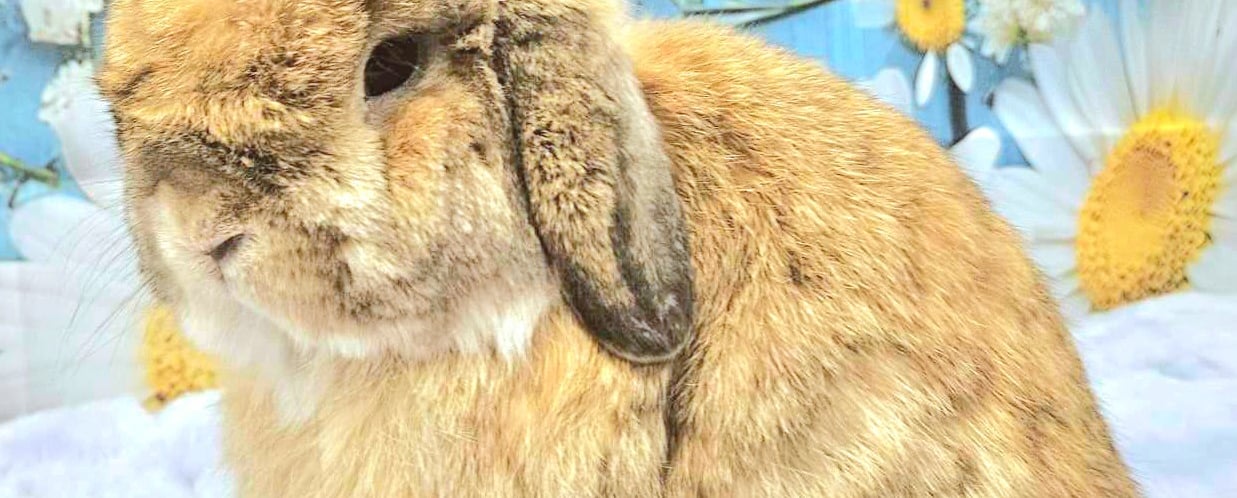
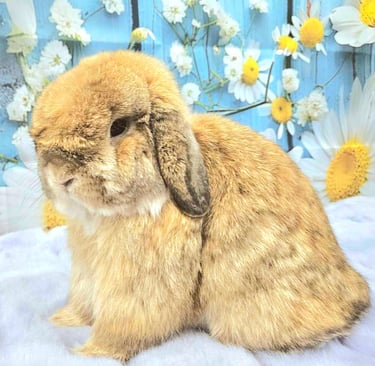
Reach out to learn more about the extraordinary Holland Lop breed and its characteristics.